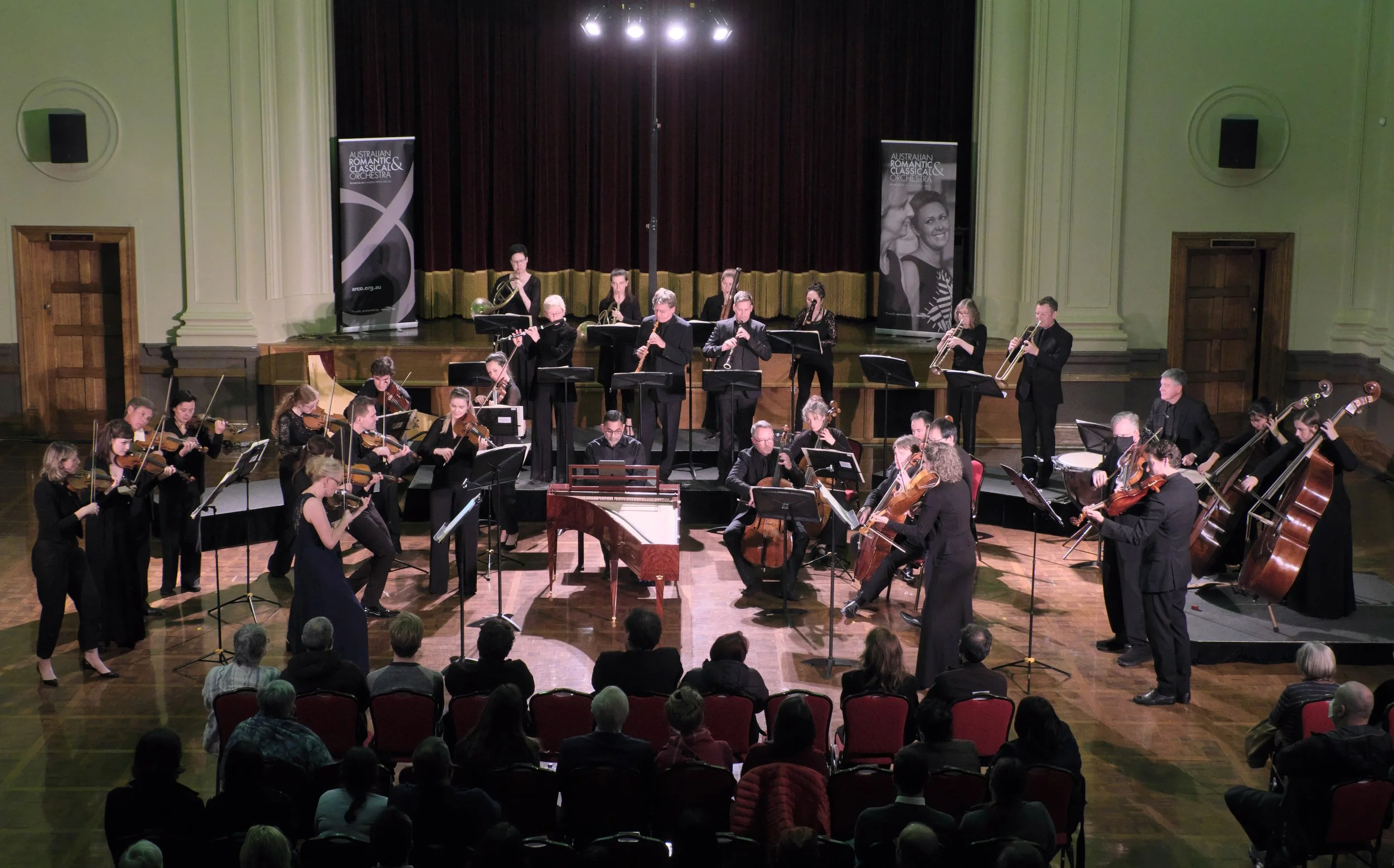
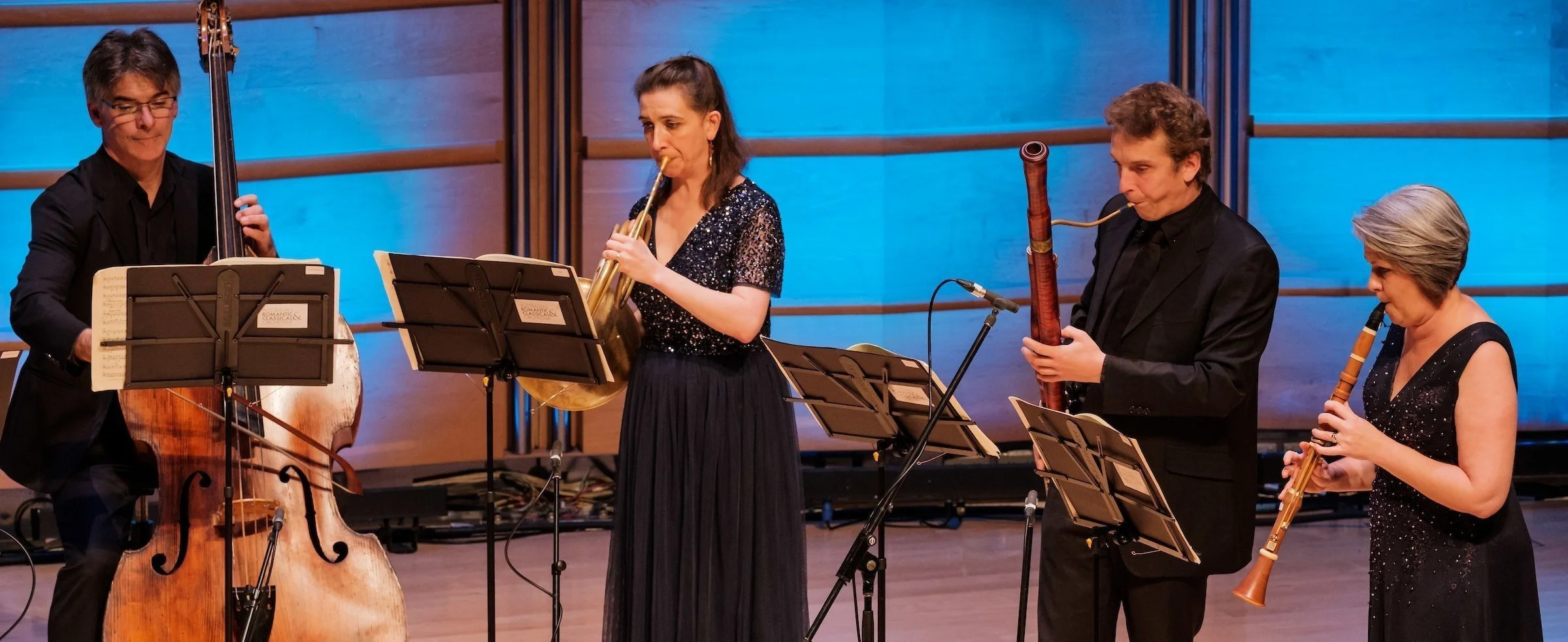
“The fine ensemble blend and communication between ensemble members in this opening work and the works to follow was a pleasing feature of this concert.”
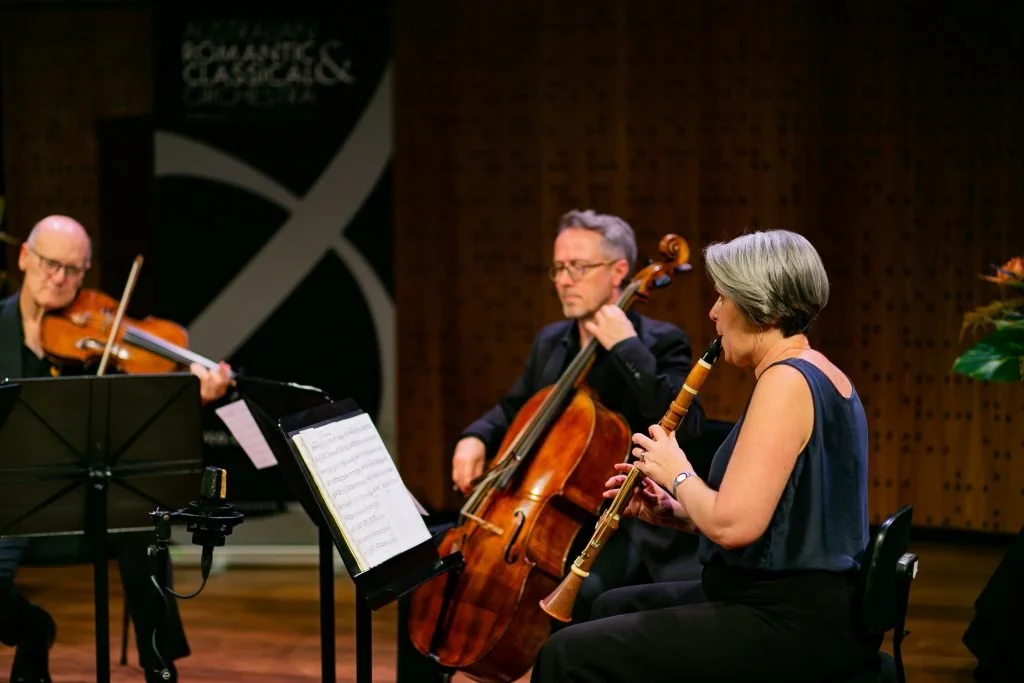
“…I was particulary touched anew by the expressive, reverent treatment of the variations in the final movement. There was plenty of space in the delivery. Simon Oswell’s viola line in the minore variation was particulary plaintive and rang out above the musical fabric. There was efficient and exciting interplay or conversation between Peter Clark and Julia Russoniello’s violin lines in this and all movements.”
“…Peter Clark’s delivery of the melody above the solid viola and cello sound here soared in clear, even voice. There were HIP portamento effects included and a good forward momentum to the phrasing, which made us wish this was not an unfinished chamber work.”
Sydney Arts Guide, 19 March 2023
Image: Teniola Komolafe
Click here to read the entire review
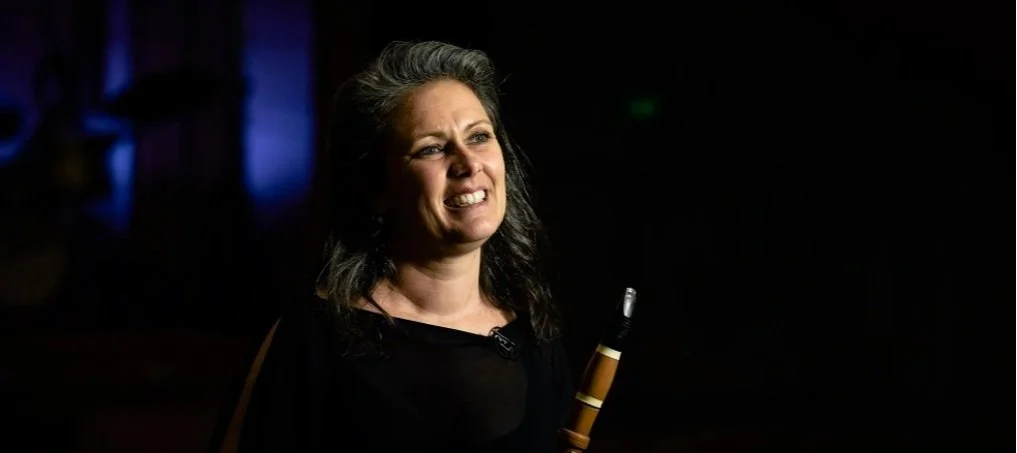
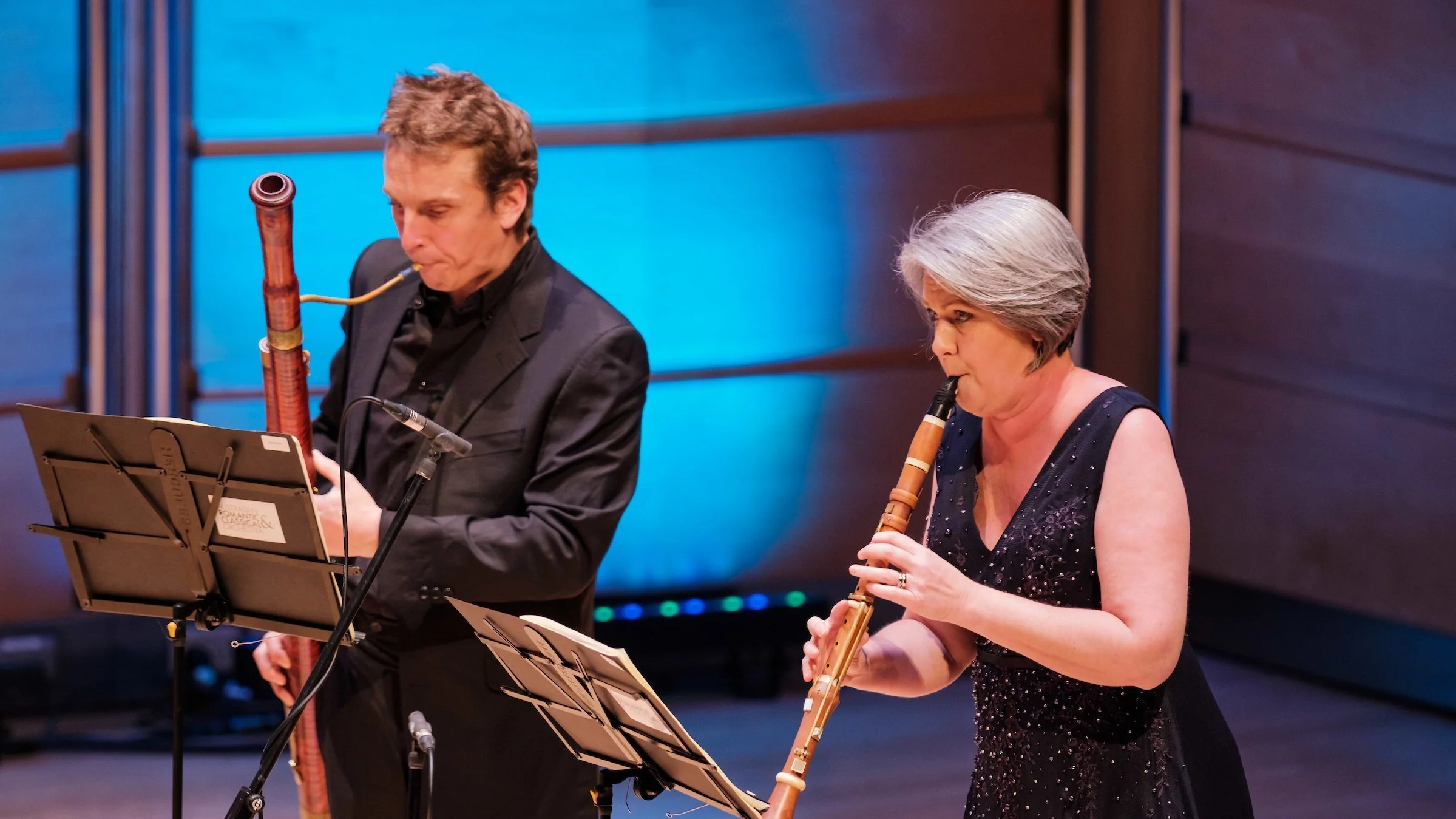
“Nicole van Bruggen owns one of the rarest and most historically significant instruments in Australia, partly invented by Mozart. Yet her basset clarinet is just 20 years old.”
…
“It’s a copy of the exact basset clarinet built by Theodore Lotz in Vienna and played by Anton Stadler, Mozart’s favourite clarinet player,” Sydney-born van Bruggen explains.
Only two pieces were composed specifically for the basset clarinet, both by Mozart: his Clarinet Concerto and Clarinet Quintet in A major.
Van Bruggen, who is performing a program with the Australian Romantic & Classical Orchestra that includes the clarinet quintet, likes to quote an 18th-century music critic seeing the basset clarinet for the first time.
“The critic said it has a bulbous section which sticks out sideways, and could be used for a smoking pipe.”…
Sydney Morning Herald, 13 March 2023
Click here to read the entire article
“At this point the audience realised they were about the hear something very special. We were not disappointed!”
Enticingly entitled Viennese Vogue, this program of chamber music for strings and clarinet featured the music of three Viennese composers of the late 18th and early 19th century.
Classic Melbourne, 10 March 2023
Click here to read the entire review
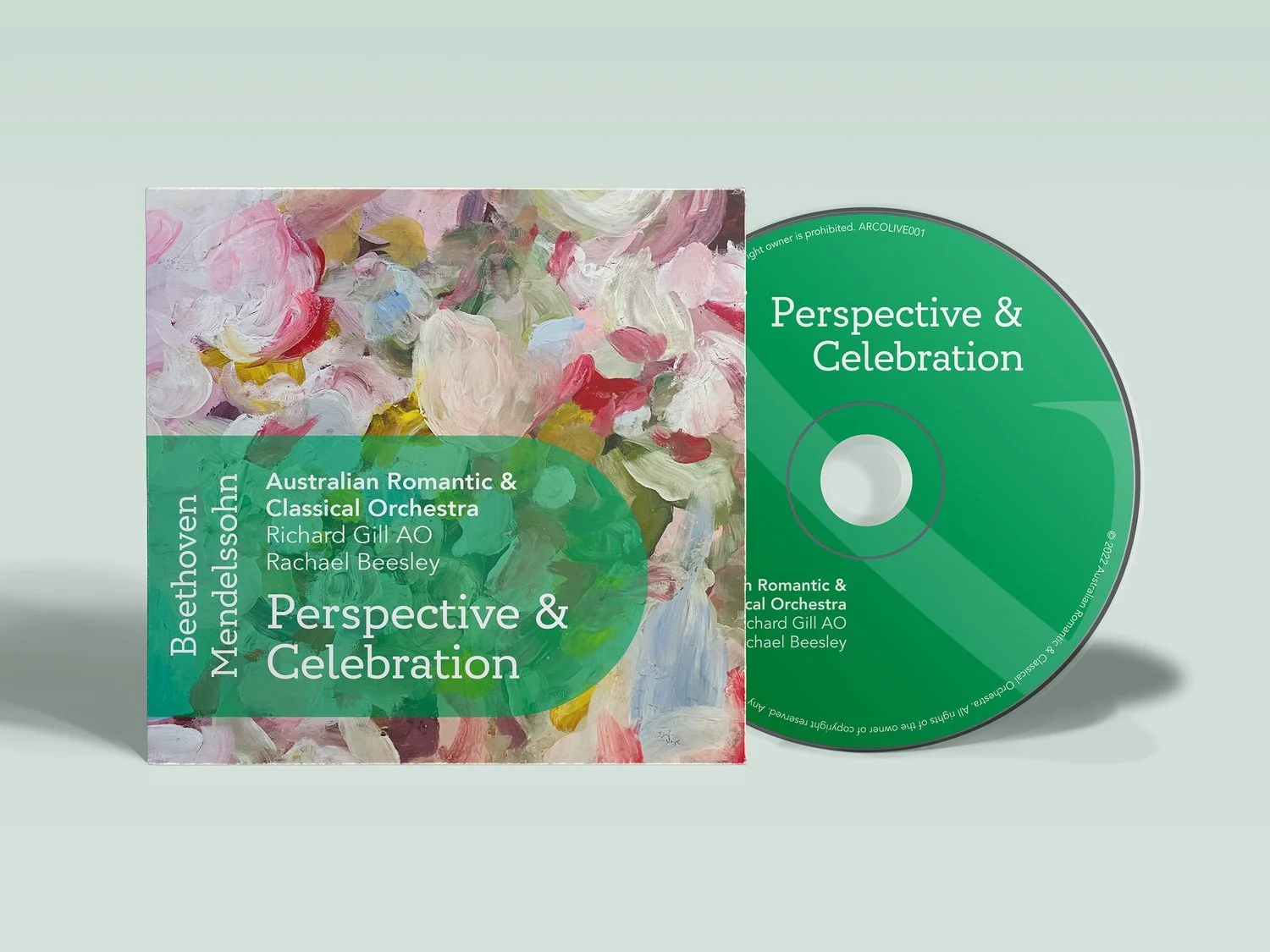
…Gill’s account of Mendelssohn’s “Fingal’s Cave” Overture shows him a consummate sculptor of orchestral tone and texture, encouraging his forces to an unbridled climax, before subsiding to an elegant conclusion.
…Beethoven’s Symphony No 7 in A, Op. 92 is the undoubted highlight of this program. Crackling with dramatic energy throughout, Beesley imbues the music both with a strong sense of architecture, as well a joyful realisation of the work’s all-important rhythmic impetus, resulting in an exciting, adrenalin-charged race to the finish.
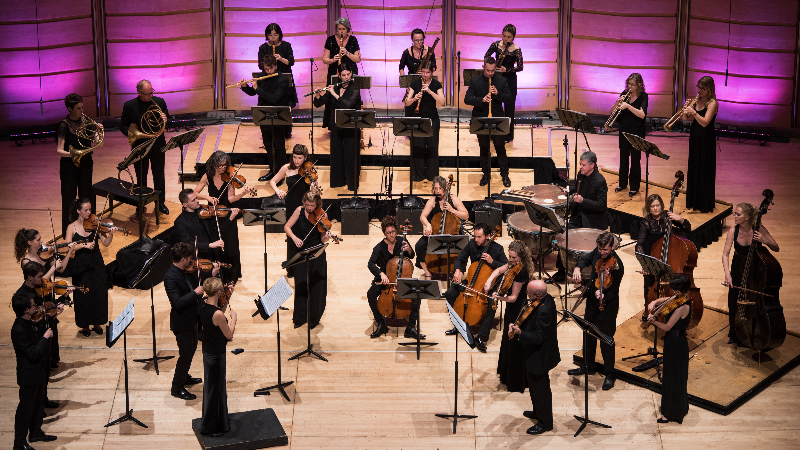
At a time when Australia is not lacking for chamber orchestras, nor for those aware of historical principles, ARCO still claims a special place in a busy, dynamic field. These ebullient performances constitute a worthy tribute to and continuation of Gill’s ardent musical trailblazing. “
Limelight 19 November 2022
Click here to read the entire review.
‘Historically informed performance is a musical language which takes years of experience to become fluent. There is much more to it than just picking up a period instrument or popping gut strings on your violin and working out how to play it technically, in time, and in tune,’ says Nicole van Bruggen, the Australian Romantic & Classical Orchestra’s co-Artistic Director and principal clarinet.
‘I like to use the analogy of learning a language – it is one thing to have high school French, but quite another to speak it like a native,’ she adds.
Perhaps counter-intuitively, van Bruggen says historically informed performance actually allows the players some individual musical expression, even though it is based on extensive research and scholarship.
‘Specialising in historic performance allows for an artistic freedom coupled with an academic foundation which is often not afforded in modern instrument ensembles and orchestras which are bound by late 20th-century modes of learning and performance,’ she says.
ArtsHub, 22 November 2022
Click here to read the entire article.
The Australian Romantic & Classical Orchestra's popular Young Mannheim Symphonists program has been brought to a triumphant conclusion for 2022, where 31 young musicians gathered for a week of intensive music-making in Melbourne. A celebratory final concert showcased the skills of these aspiring young artists who interpreted orchestral works by Mozart, Beethoven and Emilie Mayer. Applications for the 2023 instalment of this important national music education program are now open…
Broadway World, 16 October 2022
Click here to read the entire article.
Australian Romantic & Classical Orchestra – Sweet, rich, mellow, like Viennese chocolate
“Neal Peres Da Costa played this new fortepiano lovingly and sensitively, complementing the orchestra’s rich, mellow sound like Viennese chocolate. The second movement was particularly sweet.
[…]
The rich, mellow sound of this historically informed orchestra continued with Mozart’s Symphony No. 41 in C major, K.551, aptly nicknamed the Jupiter. With plenty of tempestuous gusto coming from the stage, they clearly enjoyed the lively pace of this masterful symphony. The special rapport between players was evident and would be a prerequisite for performing without a separate conductor.
The tempestuous applause at the end was a sign of the audience’s keen appreciation. “
Heidi Hereth, classikON (31 August 2022)
Image: Robert Catto
Click here to read the entire article.
“Rachael Beesley’s charismatic leading of featured string players plus timpani was full of fine characterisation across the four movements with a carefree, innocent nature.
Blend of the string soloists with the rest of the ensemble was seamless. Moments of surprise, humour and playfulness were enjoyed by the musicians and audience…
Neal Peres Da Costa’s Historically Informed Performance experience and research brought so many new options and approaches to this slow movement and in the rest of the well-known concerto. The intimate voice of the fortepiano was imbued with arpeggiation, embellishment of line and extra material to push the sound through the fortepiano’s quicker fade in tone.
The F sharp minor slow movement was nicely voiced and ornamented. Its interplay with strings and wind to trace the harmonic contour and surprises was beautifully achieved. The fortepiano tone blended into the sonic tapestry rather than rise above it as it would with a more resonant modern instrument and performance practice.
This concerto, with wind and especially clarinets used in the narrative so much, was in good hands here with the quality contributions from ARCO players… “
Paul Nolan, Sydney Arts Guide (27 August 2022)
Image: Robert Catto
Click here to read the full article.
5 stars
Never has a concert been more deserving of 5 stars.
“…The level of thought invested in Neal Peres da Costa’s interpretation of Mozart’s Piano Concert No 23 in A major, K. 488 (1786) was made clear not only in the extended, and virtuosic, cadenzas toward the end, but particularly in the haunting opening of the second movement which demands a certain lyricism and control.
After a brief intermission came the Overture to Don Giovanni. Its violent anticipation of hell’s opening is well-known, but the effect in the City Recital Hall was stark. The foreboding scales on the winds were played with great effect by Kate Clark and Jessica Lee.
[…]
What a fitting way to end this ensemble’s whirlwind tour of the East Coast!
Aryan Mohseni, State of the Art, 26 August 2022
Image: Robert Catto
Click here to read the full article.
4.5 stars
… a masterful and exuberant snapshot of the composer's oeuvre.
… The arrival of the concerto brought a sunburst of A-major beneficence. Neal Peres Da Costa played the fortepiano and the effect (from row G at least) was a sound somewhere between a piano and a harpsichord. I liked the moderate tempos throughout. The soloist brought out the sensibilities underlying the civilised urbane exterior… The finale radiated a dancing exuberance.
[…]
…this performance [of Mozart’s Jupiter Symphony] showcased visceral excitement – never at the expense of gravitas. From the peremptory opening chords and the gentle “reaction” till the last notes, this was a masterful rendition. What impressed me most was the inner detail, enhanced by the excellence of the acoustics in the City Recital Hall at Angel Place. …the orchestra captured the dazzling contrapuntal swirl and the bubbling woodwind was a delight (is it invidious to single out the gorgeous flute?).
All told, a wonderful experience!”
Greg Keane, Limelight, 25 August 2022
Image: Robert Catto
Click here to read the full article.
“The Australian Romantic & Classical Orchestra is a powerhouse of the highest quality music making. Maybe it is the dedication to historically informed performance that makes it so good. Maybe it is the joy audiences see on the player’s faces, but it is certainly the quality of its performance that makes its music something to treasure. Richard Gill, the renowned music educator and founding artistic director of the Australian Romantic & Classical Orchestra would be so proud and delighted with the music it is making today.”
Rob Kennedy, Canberra City News, 18 August 2022
Photo: Peter Hislop
Click here to read the full article.
The Australian Romantic & Classical Orchestra’s TEMPESTUOUS SKIES symphonic tour from 16-24 August brings some of Mozart’s most sublime, dramatic and passionate music to six national and regional centres…
Dooral Roundup, August 2022
Click here to read the full article.
The Australian Romantic & Classical Orchestra performs some of Mozart’s most sublime, dramatic and passionate music including Jupiter Symphony, Piano Concerto A Major, Overture to Don Giovanni and sparkling Serenata, directed by violinist Rachael Beesley….
Hills to Hawkesbury Community News, August 2022
Click here to read the full article.
“The gentle waltz of the Adagio movement featured van Bruggen and Oswell. Most interesting to note was the soft muted voice of Coppalle’s bassoon which is a modern reproduction of one by Carl August Grenser from the late 1700s. Every instrument on the stage was either an original or reproduction from between 1705 and 1840 giving the collective voice of the group a rounded, soft sound rather than the harsh, metallic ringing of modern instruments. The period instruments tend to draw you in closer as if you are listening in the salon. Schubert’s composition featured a really lovely passage in this Adagio starting with the first violin and adding each string instrument, one by one, to the conversation. It was a beautifully connected and sensitive interpretation. […]
“It was a magnificent performance by Australian Romantic & Classical Orchestra as always. Their work is consistently an incredibly high standard with players who are principals of orchestras from all around the world.”
Click here to read the full article.
Annabelle Drumm, Sydney Arts Guide, 20 June 2022
“What a way to experience the Sounds of Vienna – from newly rediscovered to old favourites, and played by experts from around the world. The audience exclaimed their appreciation in whoops, cheers and enthusiastic applause. We went out into the glittering winter’s night, with Schubert in our hearts and minds. Thank you Australian Romantic & Classical Orchestra!
Heidi Hereth, Classikon, 19 June 2022
Click here to read the full article.